If you manufacture, import, or represent products with energy labels in the European Union, EPREL is not something you should simply know about: it is something you are already legally required to comply with. EPREL — short for European Product Registry for Energy Labelling — is the official European Commission database where suppliers register their product models before placing them on the European market.
Without this registration, commercialization is not lawful. With it, the product becomes part of the system used by consumers, distributors, and authorities to verify that everything is compliant.
I want to explain what EPREL is, why it exists, what it is used for and what information it contains, who can access it, since when it has been mandatory, and what has changed in recent months. Whether you have just heard the term or have been operating in the European market for years and want a clear understanding once and for all, this is the article you need.
Key concepts for understanding EPREL
To properly navigate the obligations of the European product registry and ensure compliance within the single market, it is essential to master certain technical and administrative terms.
These concepts make it possible to understand not only the registration process and energy labelling requirements, but also the legal responsibility of suppliers and consumers’ right to access transparent information regarding the energy consumption of their devices.
What is an energy label?
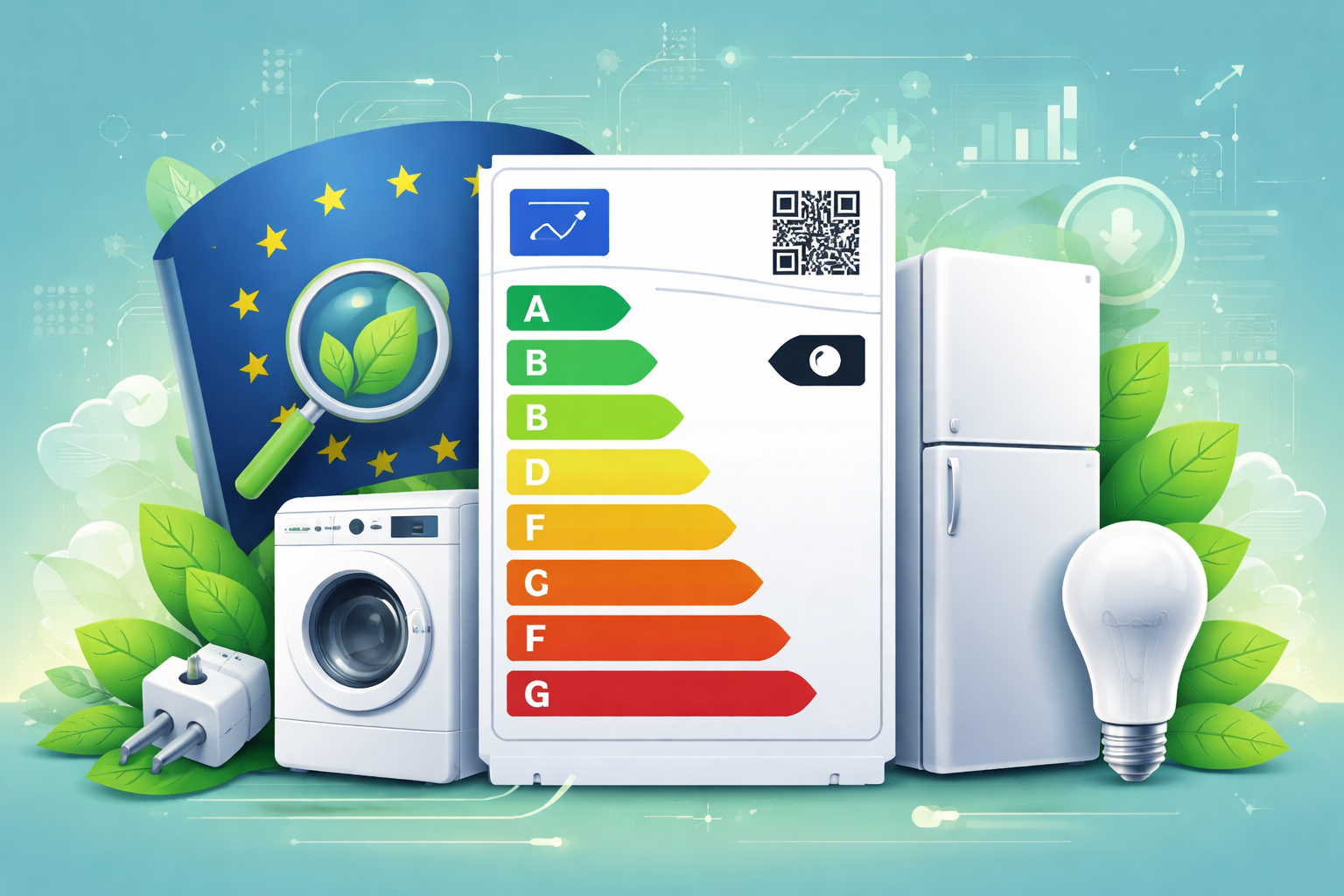
The label displaying energy efficiency classes from A to G that identifies a product’s energy performance. Within the EPREL system, it exists both as a printed physical label and as a downloadable electronic format.
What is the QR code in EPREL?
A code printed on the energy label that links directly to the model’s public registration in EPREL. Models belonging to unverified suppliers have a non-functional QR code.
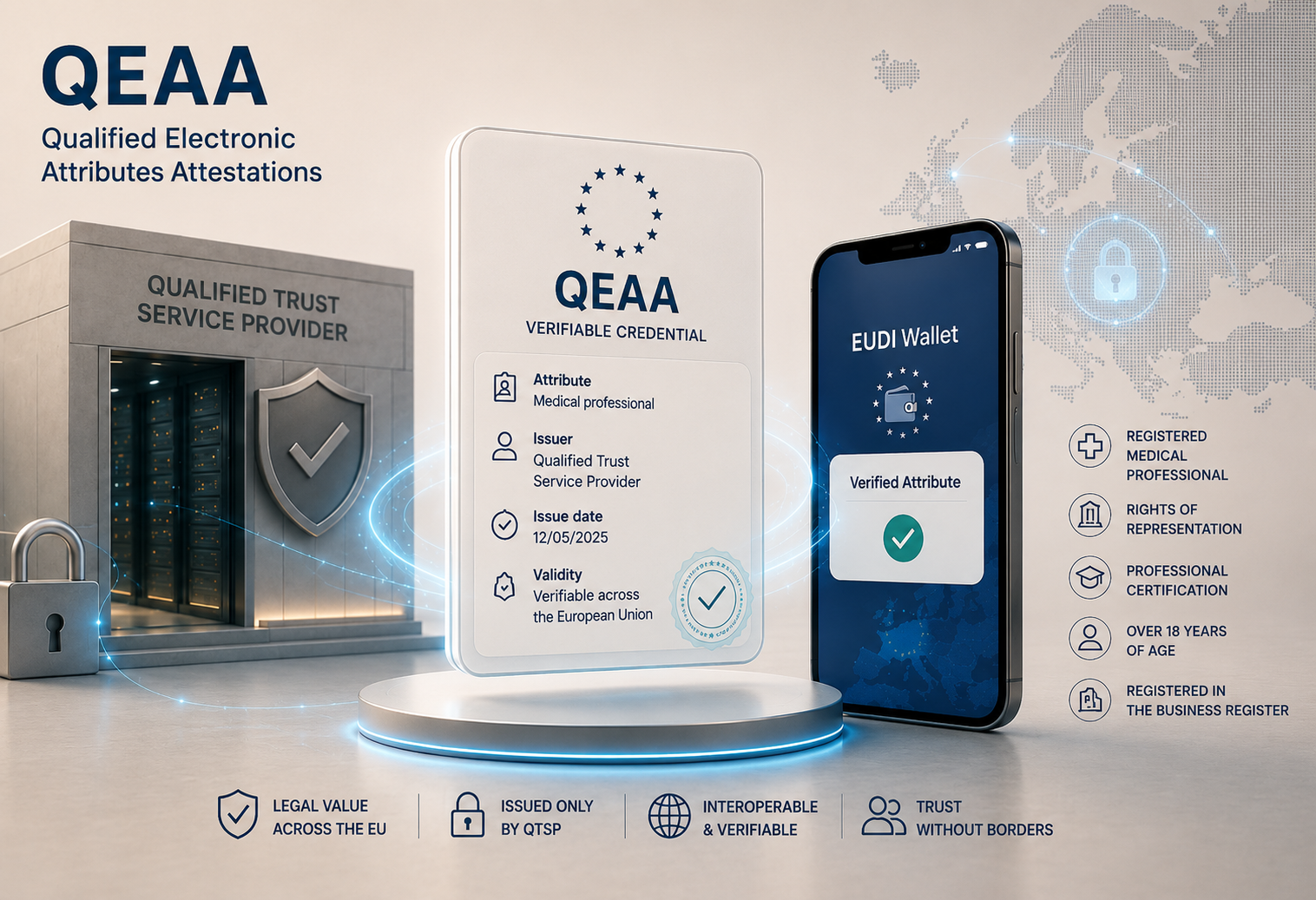
What is a QTSP (Qualified Trust Service Provider)?
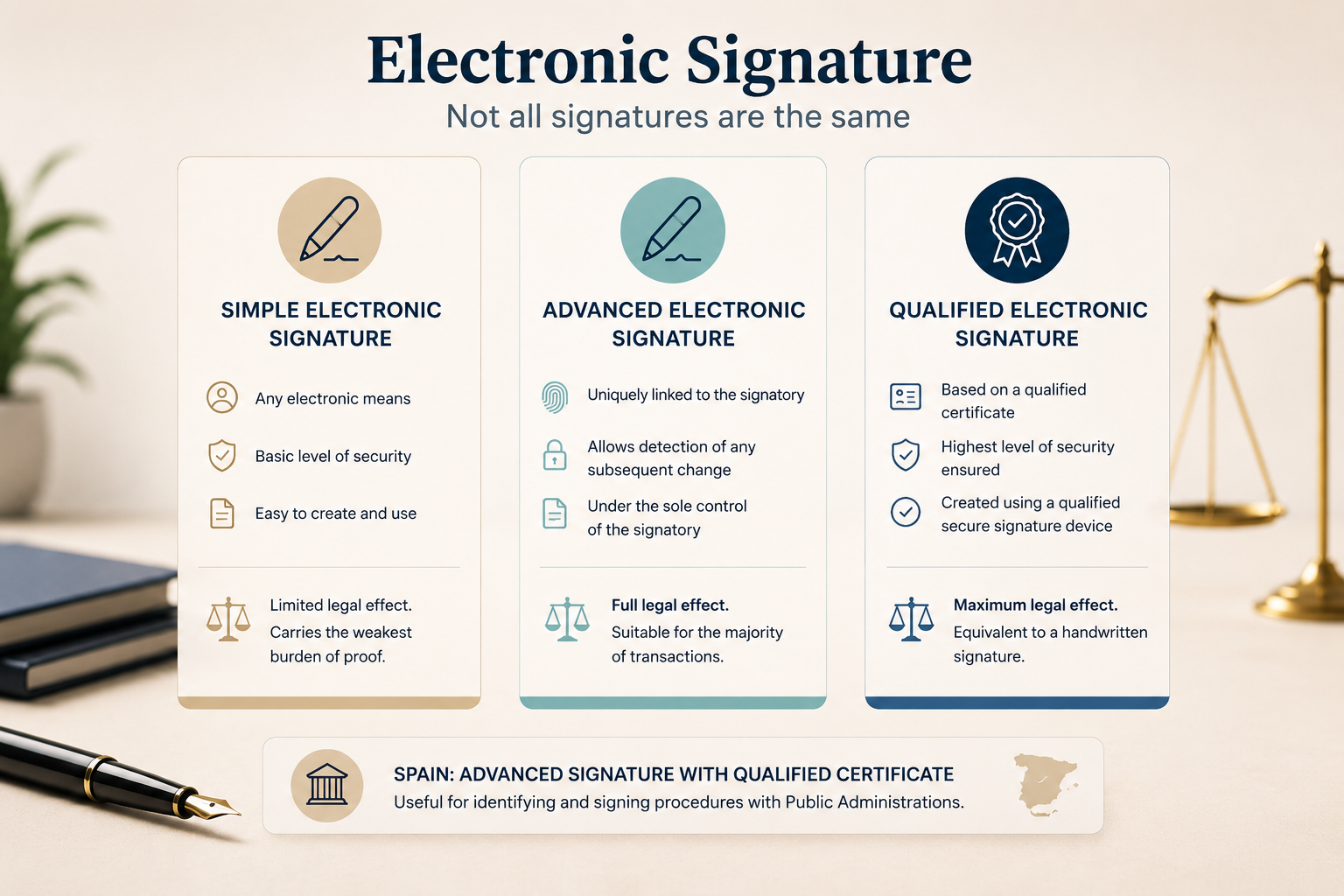
A Qualified Trust Service Provider (QTSP) is a provider included in the EU Trusted List and authorized to issue qualified electronic seals. Only QTSPs may issue the seals that enable verification in EPREL as of October 2024.
What is the NTR (National Trade Register)?
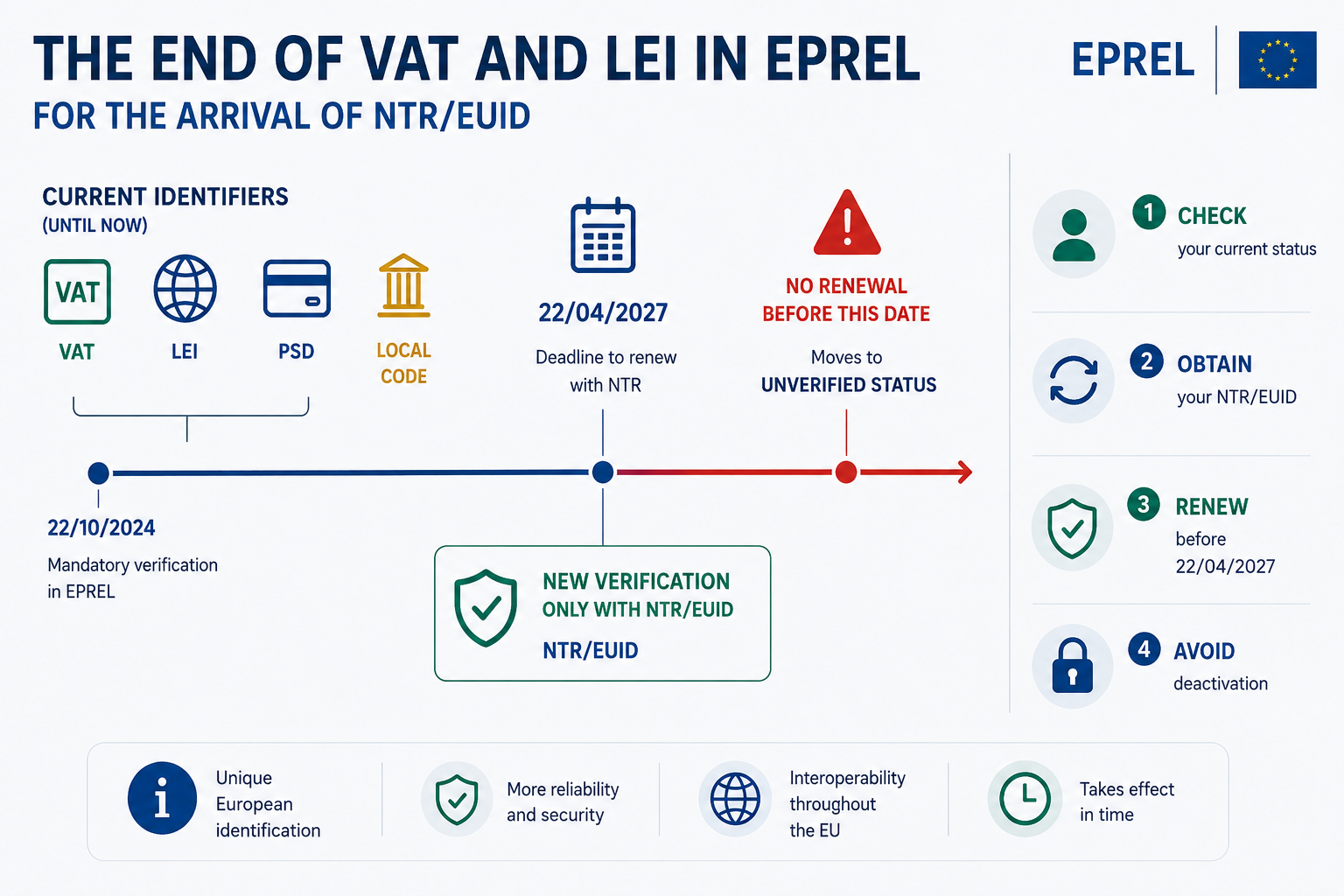
Identification based on the supplier’s national trade register number, encoded in accordance with section 5.1.4 of standard EN 319 412-1. It has been mandatory in the qualified electronic seal for EPREL verification since 22 October 2024.
What are Market Surveillance Authorities (MSAs)?
National authorities of the Member States with access to the compliance section of EPREL in order to carry out conformity checks.
What is EPREL and what exactly is it used for?
Think of EPREL as the property registry of the energy-related products world: before a model can enter the European market, it must be registered. And that registration generates two things: a public product sheet containing the information consumers need to compare products, and a technical documentation file that only authorities can access when they need to verify that the product complies with what it claims.
In practice, EPREL is the place where three actors with three different objectives converge. The supplier (manufacturer, importer, or authorized representative) registers its models and uploads the technical documentation before the first sale. The consumer or distributor consults the electronic energy label, the product information sheet, and the QR code in order to compare products and make informed decisions.
The Market Surveillance Authority (MSA) accesses the restricted technical documentation to verify that the declared values are accurate and that the product complies with regulatory requirements.
Why does EPREL exist? The legal framework that makes it mandatory
EPREL was not created as a voluntary industry initiative: it is a direct legal creation. Its legal basis is Article 12 of Regulation (EU) 2017/1369 of the European Parliament and of the Council, which entrusts the European Commission with creating and maintaining this database.
That same regulation establishes the principle governing the entire system: no supplier may place the first unit of a regulated model on the European market without having previously registered it in EPREL. This is not a recommendation. There is no grace period after the first sale. The obligation exists before the first product is placed on the market.
The underlying objective is consistent with the European Union’s energy policy: to ensure that consumers can make informed decisions regarding the energy consumption of the products they purchase, and that authorities can verify that companies comply with the claims they make. EPREL is the technical infrastructure that makes both objectives possible at the same time.
The rule is simple: first registration, then sale. The order admits no exceptions.
What does EPREL contain? The two parts of the system
The system has two distinct parts that should be clearly differentiated from the outset.
The public section (Public Site) is freely accessible to anyone, without the need for an account or password. This is where consumers, distributors, and public procurement buyers can search for models by identifier, brand, or product group. This section displays the electronic energy label, the Product Information Sheet, and the QR code appearing on the physical label.
It is the showcase. The compliance section (Compliance Site) is the area where suppliers register their products and upload technical documentation: test reports, measurement methods, and the rest of the supporting information. It requires authentication and, since October 2024, electronic verification. This section is also accessible to Market Surveillance Authorities when carrying out conformity checks, but not to the general public. It is the archive.
What information does EPREL contain?
Regulation (EU) 2017/1369 specifies in detail what must be registered in each section. In the public section, the supplier must include the trade name or trademark, address and legal identification details, the model identifier, the electronic energy label, the energy efficiency class or classes, and the parameters contained in the Product Information Sheet.
In the compliance section, in addition to the public data, the supplier registers the model identifiers of all equivalent models already placed on the market, together with the complete technical documentation. That documentation — including test reports and measurement methods — is what enables authorities to verify that the declared values correspond to the actual ones.
One important feature of the system is that the information contained in the public section cannot be deleted. Furthermore, once a model is no longer marketed, the supplier remains obliged to keep the technical documentation accessible in the compliance section for fifteen years. The obligation does not end when sales cease.
Who is required to register in EPREL?
The obligation falls upon the supplier, as defined in Article 2 of Regulation (EU) 2017/1369: the manufacturer established within the European Union, the authorized representative of a manufacturer not established in the EU, or the importer placing the product on the European market. The EEA and Northern Ireland are considered part of the Union market for these purposes.
Distributors (physical stores, online sales platforms, intermediaries) do not register models, but they do have their own obligations: they must visibly display the label provided by the supplier, including in online distance selling. If the label they display is not the one supplied in the product packaging, they must ensure that the QR code remains visible and readable.
E-commerce platforms are also required to facilitate the display of the electronic label and the Product Information Sheet alongside the product price. The chain of responsibility extends to all market participants, although each has a different role.
Since when has it been mandatory? The timeline that matters
The obligation to register products in EPREL before the first placement on the market of any new model subject to energy labelling has applied since 1 January 2019. This marks the starting point of the system for product groups with energy labels regulated under delegated acts of Regulation (EU) 2017/1369.
In 2020, tyres in categories C1, C2, and C3 became subject to EPREL registration requirements with the entry into force of Regulation (EU) 2020/740. Furthermore, from 20 June 2025, new models of smartphones and tablets also became subject to registration requirements pursuant to Delegated Regulation (EU) 2023/1669.
In addition, in 2021, Regulation (EU) 2019/1020 on market surveillance became fully applicable, strengthening the supervisory framework for all economic operators.
Which products fall within the scope of EPREL?
The scope of application is broad. Any good or system whose use has an impact on energy consumption, and which is regulated by a delegated act under Regulation (EU) 2017/1369, must be registered in EPREL before its first placement on the EU market.
As of today, the active product groups include, among others: household refrigeration appliances, household washing machines and washer-dryers, household dishwashers, tumble dryers, electronic displays (monitors and televisions), light sources, air-conditioning equipment and heat pumps, water heaters and boilers, tyres in categories C1, C2, and C3, and smartphones and tablets (for new models from 20 June 2025 onwards).
Excluded from the scope are second-hand products (unless imported from a third country) and means of transport for persons or goods.
What changed in October 2024? Mandatory electronic verification
This is the most significant change of recent years and the one with the greatest impact on the day-to-day operations of suppliers.
Until 22 October 2024, accessing the EPREL compliance system to register models was relatively straightforward: it was sufficient to create an EU Login account, register the organization, and begin operating. From that date onwards, Implementing Regulation (EU) 2024/994 changed the rules of the game.
Since then, in order to register models in EPREL (or modify existing ones), the supplier must be a verified supplier. And verification can only be completed through a qualified electronic seal containing the NTR (National Trade Register), that is, the supplier’s trade register number, encoded in accordance with standard EN 319 412-1.
What this means in practice is simple: without a qualified electronic seal issued to the legal entity by a QTSP, the supplier appears as “unverified” and cannot operate — neither registering new models nor modifying existing ones. The regulatory rationale is clear: to guarantee the authenticity of the information and ensure that it originates from trustworthy sources, by verifying the supplier’s identity in accordance with the relevant EU legislation and international standards.
What happens if a company is not verified?
The consequences are concrete. An unverified supplier cannot register new product models or modify those already registered. This has a direct impact on the ability to operate within the European market: without registration in EPREL, the model cannot be lawfully commercialized.
Additionally, models belonging to unverified suppliers disappear from the system’s public search results. Distributors needing access to the label or product information sheet through EPREL APIs will no longer be able to retrieve them, and the QR code on the label will cease to function properly. Finally, Market Surveillance Authorities retain access to the compliance section. Failure to comply with registration requirements, or the existence of models lacking adequate technical documentation, may lead to enforcement actions and regulatory controls.
Verified supplier vs. unverified supplier in EPREL
| Aspect | Unverified Supplier | Verified Supplier |
|---|---|---|
| Registration of new models | Not permitted | Permitted |
| Modification of existing models | Not permitted | Permitted |
| Visibility in public search results | Removed from the system | Visible |
| Functional QR code | Not guaranteed | Yes |
| Distributor access via API | Blocked | Available |
| Lawful commercialization | Impossible without registration | Compliant |
How can a qualified electronic seal be obtained for EPREL verification?
The electronic seal that the supplier needs in order to be verified in EPREL must be issued by a Qualified Trust Service Provider (QTSP) included in the official European Union list, the EU Trusted List, and capable of issuing seals containing the NTR encoded in accordance with standard EN 319 412-1.
EADTrust appears on that official list and has issued more than 200 EPREL certificates to companies and self-employed professionals operating in the European market. The process for obtaining the entity seal is agile and can be completed within a few working days, once the necessary documentation has been provided.
If you want to better understand the full verification process using a qualified NTR seal, the article on QSealC verification explains each step in detail.
Frequently Asked Questions (FAQ) about EPREL
Yes. Since 1 January 2019, registration has been mandatory for product groups with energy labels regulated under Regulation (EU) 2017/1369. The obligation applies to the supplier before the first placement on the market of any new model.
No. The energy label is the document that informs consumers about a product’s energy efficiency. EPREL is the database where that label — together with much more technical information — is registered and centralized. The label exists within EPREL, but EPREL is far more than just the label.
No. The distributor uses the information already registered by the supplier. Its obligation is to display the label and the Product Information Sheet to consumers, not to register the model.
The registration of the model itself does not expire, although the supplier is required to keep the technical documentation available for at least fifteen years from the date on which the end of commercialization is declared. What may expire is the supplier’s verification status if it fails to renew the qualified electronic seal within the established deadlines.
The following information is public: the energy label, the Product Information Sheet, the QR code, the energy efficiency class, and the supplier’s identification details.
The following information is confidential — accessible only to Market Surveillance Authorities: technical documentation, including test reports, measurement methods, and supporting documents.
If the product is regulated by a delegated act under Regulation (EU) 2017/1369, no. Without registration in EPREL, there is no lawful commercialization in any EU Member State.
Is your company already properly registered and verified in EPREL?
Many companies have products registered but have not yet completed the verification process using the qualified electronic seal with NTR required since October 2024. And many of those that were verified before April 2025 using methods other than NTR are already within the renewal period.
At EADTrust, we have spent years working at the intersection of European regulation and digital trust services. We are a QTSP included in the EU Trusted List and have managed more than 200 EPREL certificates.
No-obligation consultation: in just 5 minutes, we can tell you whether your company is correctly verified in EPREL and what steps you need to take next.